



That clicking sound around your jaw joint jaw or persistent ache around your ear might be more than just stress — it could be temporomandibular joint disorder (TMD). Learn what causes TMJ pain, how to recognise it, and what modern treatment options can offer you lasting relief.
When Your Jaw Hurts More Than It Should
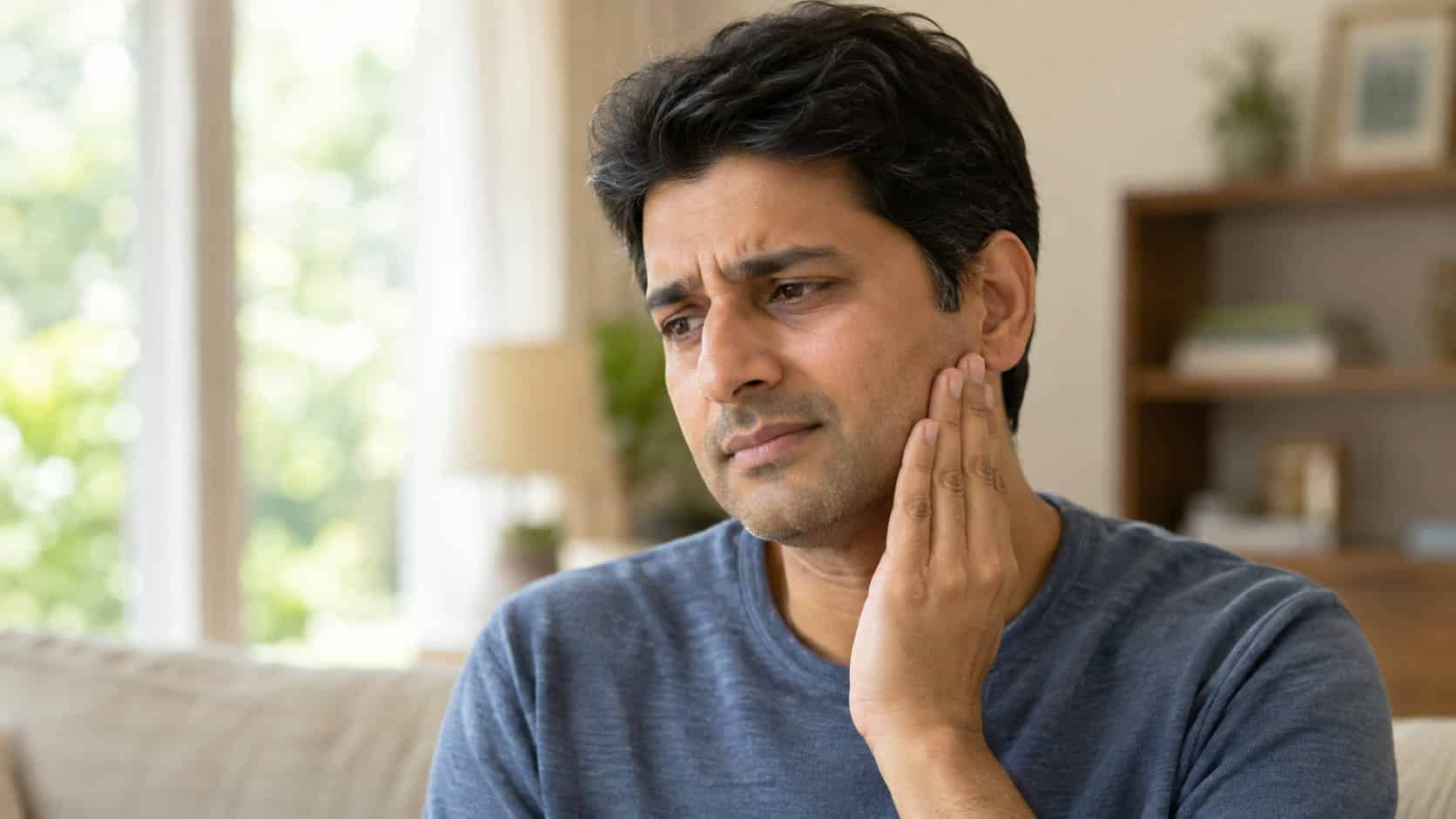
Most of us take our jaw for granted — until it starts to hurt. Whether it is a dull ache near your ear in the morning, a clicking or popping sound when you chew, or a jaw that occasionally locks mid-bite, these are signs worth paying attention to. They often point to a condition called temporomandibular joint disorder, commonly known as TMD or TMJ disorder.
What Is the Temporomandibular Joint?
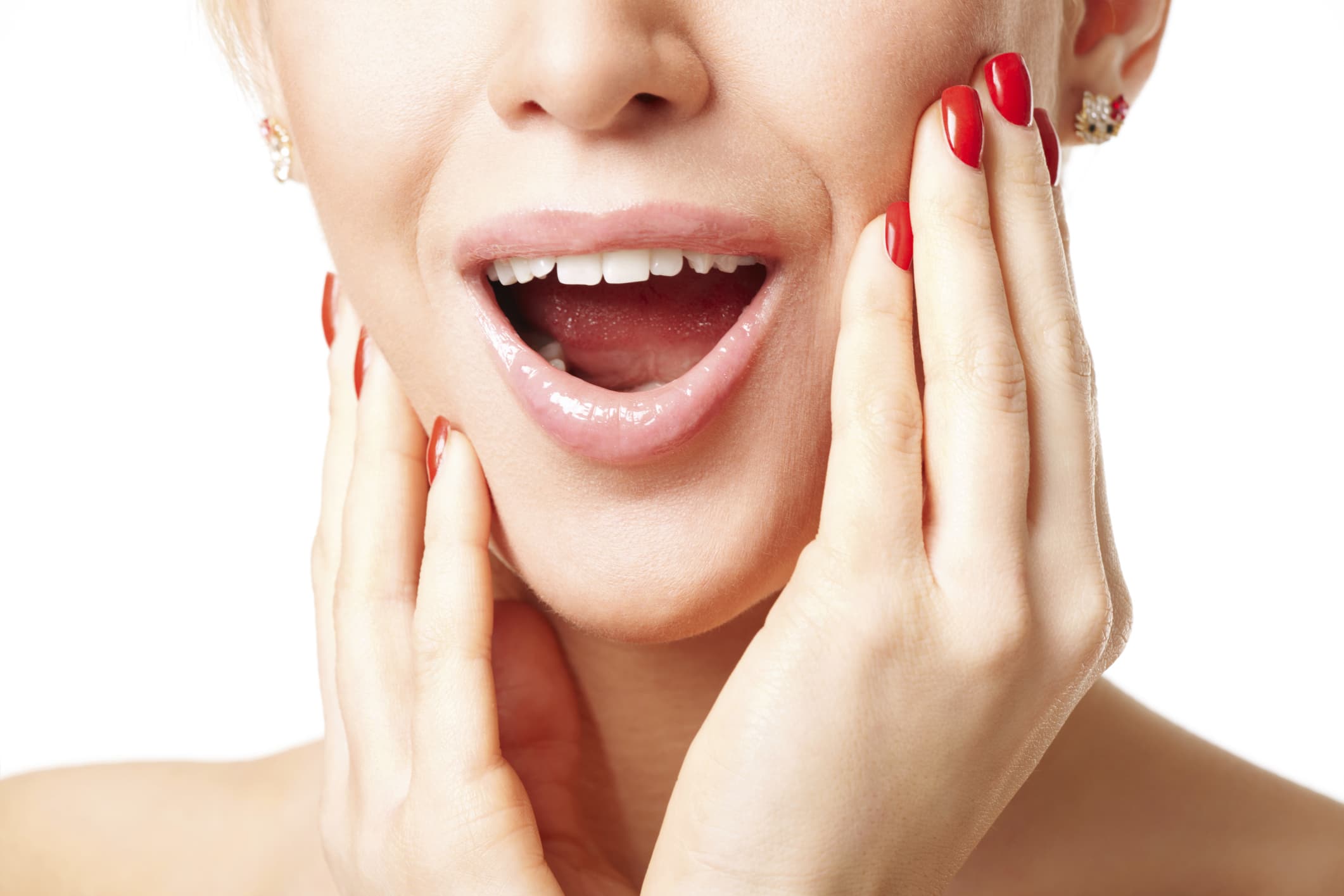
Your temporomandibular joint (TMJ) sits just in front of each ear, on either side of your face. You can actually feel it move if you place your fingertips there and open your mouth. This joint acts like a hinge and a sliding track at the same time — a unique combination that allows the wide range of jaw movements we rely on daily.
Common Causes of TMJ Pain
TMJ pain rarely has a single cause. In most patients, it results from a combination of factors that place excess strain on the joint or surrounding tissues. Some of the most common contributors include:
- Bruxism (teeth grinding or clenching): This is one of the leading causes of TMD. Many people grind their teeth during awake and sleep without realising it. The repeated force places enormous stress on the joint and the muscles of the jaw. Over time, this can lead to muscle fatigue, joint inflammation, and worn-down teeth.
- Misaligned bite: When the upper and lower teeth do not fit together properly — due to missing teeth, poorly fitting dental restorations, or jaw structure — the joint is forced to compensate with every bite, gradually causing strain and pain.
- Jaw injury or trauma: A direct blow to the jaw, a sports injury, or even a minor accident can damage the joint or shift the cartilage disc out of position.
- Arthritis: Osteoarthritis and rheumatoid arthritis can both affect the TMJ, gradually breaking down the joint’s cartilage and bone.
- Stress and muscle tension: Emotional stress often manifests physically — particularly as tightness in the jaw and facial muscles. Chronic tension can trigger or worsen TMJ pain significantly.
- Poor posture: Forward head posture, common among office workers and smartphone users, shifts the alignment of the neck and jaw and can contribute to ongoing facial pain.
Symptoms to Watch For
TMJ pain does not always announce itself as jaw pain. The symptoms can be surprisingly varied, which is why many patients spend months investigating headaches, ear problems, or neck pain before a TMD diagnosis is made.
- Jaw pain or facial pain, especially around the joint, cheeks, or temples. Pain often worsens in the morning after a night of grinding, or toward the end of the day after extended talking or eating.
- Jaw clicking, popping, or grating sounds when opening or closing the mouth. These sounds are caused by the cartilage disc shifting position within the joint. They are not always painful, but they signal that the joint mechanics are not quite right.
- Limited jaw movement — difficulty opening the mouth fully, or the jaw getting stuck or locked briefly in the open or closed position.
- Headaches, particularly tension-type headaches, that seem to originate near the temples or at the back of the head.
- Ear pain, a sensation of fullness in the ear, or tinnitus (ringing in the ears) — because the TMJ sits so close to the ear canal, inflammation in the joint often radiates into the ear.
- Neck and shoulder stiffness, which can develop as the surrounding muscles compensate for joint dysfunction.
Dr. Vikram PanditTMJ disorders are often more manageable than patients expect. In the majority of cases, a combination of physical therapy, a specifically designed TMJ splint, and some targeted lifestyle changes makes a significant difference — without the need for surgery. The key is getting an accurate diagnosis early, before compensatory patterns set in.
Non-Surgical Treatment Options for TMD
The encouraging reality about TMJ disorder is that the vast majority of patients improve with conservative, non-surgical treatment. Specialists typically start with the least invasive approaches and step up only if needed.
- Physiotherapy: A physiotherapist trained in jaw disorders can guide exercises that stretch and strengthen the jaw muscles, improve joint mobility, and correct postural imbalances that contribute to facial pain.
- Medications: Anti-inflammatory medications (such as ibuprofen) can reduce pain and swelling in the short term. Muscle relaxants may be prescribed for periods of severe muscle spasm. In some cases, low-dose tricyclic antidepressants are used for chronic pain management — not as a mood treatment, but because they are effective at dampening pain signals.
- Bite correction: If a misaligned bite is contributing to the problem, Dr. Vikram Pandit may recommend adjustments to existing dental work, or orthodontic treatment to improve how the teeth come together.
- Botulinum toxin (Botox) injections: When jaw muscle overactivity is a primary driver, injections into the masseter muscle can reduce muscle force significantly, offering relief for months at a time. This is a well-established adjunct treatment for bruxism and TMD-related muscle pain.
- Counselling and stress management: Because stress is such a significant trigger, cognitive behavioural therapy (CBT) or relaxation techniques are a meaningful part of managing chronic TMD.
When Surgery May Be Considered
Surgery for TMJ disorder is relatively uncommon and is only considered when thorough non-surgical treatment has not provided adequate relief, or when there is a clear structural problem within the joint that conservative care cannot address.
- Arthrocentesis: This is the simplest surgical procedure for the TMJ. Under local anaesthesia, the joint is flushed with sterile fluid to remove inflammatory byproducts and free up a disc that has become stuck. It is minimally invasive and can be performed in a clinic setting.
- Arthroscopy: A small camera and thin instruments are inserted into the joint, allowing the surgeon to remove inflamed tissue, reposition the disc, or smooth bone surfaces. This is less invasive than open surgery and has a shorter recovery time. It is a keyhole surgical procedure that has the ability to give good relief of symptoms.
- Open joint surgery: Reserved for the most complex cases — severe structural damage, joint tumours, or advanced degenerative joint disease — open surgery allows direct access to the joint for repair or reconstruction. In some patients, the joint may need to be partially or fully replaced. The custom designed total joint replacement has become more predictable with newer materials and computer designed manufacturing process.
The decision to pursue surgery is never taken lightly. A thorough imaging assessment (typically an MRI and CT scan) and a clear discussion of risks, recovery, and expected outcomes are essential before any surgical recommendation is made.
Lifestyle Changes and Home Remedies That Actually Help
Alongside formal treatment, day-to-day habits play a meaningful role in managing TMJ pain. Small, consistent adjustments can prevent flare-ups and support recovery.
- Eat soft foods during flare-ups: Give your jaw a rest by temporarily avoiding hard, chewy, or crunchy foods — tough meats, raw carrots, hard breads, and chewing gum are common aggravators.
- Apply warm or cold compresses: A warm compress on the jaw muscles can ease tension and improve blood flow. A cold pack can help reduce acute inflammation. Alternate between the two if needed.
- Be mindful of jaw habits: Many people clench their teeth unconsciously during the day, especially when concentrating or under stress. Practice keeping your lips together but teeth slightly apart as a resting position.
- Avoid wide opening: Try not to yawn with your jaw fully stretched or take very large bites of food. Support your jaw gently with your hand when you feel a wide yawn coming on.
- Work on your posture: Sitting up straight and adjusting your workstation to eye level can reduce the forward head posture that strains the jaw and neck muscles.
- Limit caffeine and alcohol: Both can worsen bruxism and disrupt the sleep quality that is important for muscle recovery.
These steps will not resolve a structural TMJ problem on their own, but combined with professional treatment, they can significantly shorten recovery time and reduce the frequency of painful episodes.
Frequently Asked Questions
Many mild cases of TMJ pain do improve on their own, especially if they are triggered by a temporary stressor or a short period of grinding. However, if your jaw pain, clicking, or limited movement has persisted for more than a few weeks, it is worth having it assessed. Without treatment, some cases worsen over time as compensatory muscle tension and joint strain accumulate. Early intervention generally leads to better outcomes and faster relief.
Jaw clicking without pain is quite common and does not always require treatment. The clicking indicates that the cartilage disc inside the joint is shifting as you open and close your mouth, but if there is no associated pain, locking, or functional difficulty, many specialists take a watchful waiting approach. That said, it is worth having a specialist examine you, as some cases of painless clicking can progress. Knowing what is causing it means you can address any contributing habits — like grinding — before symptoms develop.
Absolutely. Stress is one of the most common triggers of TMJ pain, and the connection is well established. When we are anxious or under pressure, many of us unconsciously clench our jaw or tense our facial muscles — sometimes for hours at a time. This sustained muscle contraction leads to fatigue, inflammation, and pain in and around the joint. Managing stress through exercise, sleep, therapy, or mindfulness is genuinely part of treating TMD, not just a general wellness suggestion.
For mild to moderate TMD — particularly when teeth grinding or bite issues are involved — a dentist with experience in jaw disorders can provide effective treatment, including nightguards and bite adjustments. However, if your symptoms are severe, include locking, have not responded to initial treatment, or suggest a structural problem within the joint itself, seeing a specialist is the right move. At Pandit Clinic, Dr. Vikram Pandit provides comprehensive TMJ assessments, evaluating both joint structure and all contributing factors to give you a complete picture and a clear treatment path.
You Do Not Have to Live With Jaw Pain
TMJ pain can quietly take over your day — making eating uncomfortable, turning mornings into a cycle of stiffness and headaches, and leaving you unsure where to even begin looking for answers. The reassuring truth is that temporomandibular joint disorder is well understood, and effective treatments exist for the full spectrum of severity, from mild muscle tension to complex joint problems.
Most patients never need surgery. With the right assessment, a combination of a nightguard, physiotherapy, some targeted lifestyle adjustments, and appropriate medication is enough to restore comfortable jaw function and put an end to the daily grind — literally.
If you have been experiencing persistent jaw pain, jaw clicking, facial pain, or any of the symptoms described in this article, the right place to start is a proper clinical evaluation. At Pandit Clinic in Pune, Dr. Vikram Pandit has experience diagnosing and managing TMJ disorders with a thorough, patient-first approach — assessing everything from joint structure to bite and muscle function to give you answers, not guesswork.
Book a consultation with Dr. Vikram Pandit at Pandit Clinic today. You deserve a jaw that works without complaining about it.

Meet the Doctor
BDS, MDS Oral & Maxillofacial Surgeon
Dr. Vikram is a visiting consultant and consultant oral and maxillofacial surgeon at the top hospitals in Pune like Poona Hospital and Research Centre, Ratna Memorial Hospital, Pandit Clinic and KEM Hospital. Dr. Vikram has done clinical fellowship in craniofacial surgery with focus on surgery for cleft lip and palate deformities, orthognathic surgery and surgery for sleep related disordered breathing (SRDB). He has trained for advanced management for Facial Trauma, from Taiwan. He has also attended various seminars and done workshops related to Oral and Maxillofacial Surgery. Dr. Vikram is also a co- author of a chapter for a textbook. He has been invited as a speaker for number of conferences in India as well as Internationally.