





So Many Options, So Little Clarity — Let's Fix That
If you have recently been told that you or your child needs orthodontic treatment, the next question is almost always the same: which type of braces should we go with? A quick search turns up metal braces, ceramic braces, clear aligners, invisible braces, and a dozen brand names — and it can feel impossible to compare them fairly.
The good news is that the decision is more straightforward than it looks once you understand what each option actually does, and what its real advantages and limitations are. This guide walks you through each type in plain language, so that by the time you sit down with your orthodontic specialist, you are ready to have a genuinely informed conversation rather than a guessing game.
One important note before we begin: the right choice for your situation depends on the specific alignment issue being treated, your age, your lifestyle, and your budget. No single option is universally superior. Think of this guide as a starting point, not a prescription.
What Orthodontic Treatment Does and Why It Is Recommended
Orthodontic treatment uses controlled, gentle pressure applied over time to guide teeth into better positions. The goal is to improve the alignment of the teeth and, in many cases, the relationship between the upper and lower jaws. The result can affect both how your teeth look and how they function.
Treatment is typically recommended when teeth are crowded, spaced too far apart, rotated, overlapping, or when the bite is misaligned — meaning the upper and lower teeth do not come together the way they should. A poor bite can make chewing less efficient and can make it harder to keep teeth clean, which may contribute to overall dental and gum issues over time.
For children, early assessment matters because some alignment concerns are easier to guide during periods of jaw growth and development. In adults, treatment is equally possible, though the approach may differ. The earlier a concern is identified, the broader the range of options available — which is one reason an assessment during childhood or early adolescence is worthwhile even if treatment does not begin immediately.
Metal Braces: Reliable, Proven, and Still the Gold Standard for Many Cases
Metal braces are what most people picture when they hear the word braces — small silver colored metal brackets bonded to the front of each tooth, connected by a wire that is periodically adjusted to move the teeth gradually into position. They have been used for decades and remain the most widely available type of orthodontic appliances.
The main advantages of metal braces are their versatility and strength. They can handle a wide range of alignment issues, including complex cases involving significant crowding or bite correction. They are also generally the most cost-effective option, and because they are fixed in place, there is no risk of forgetting to wear them — compliance is built in.
On the downside, metal braces are the most visible option. The brackets and wire are noticeable, which matters to many teenagers and adults. They can also cause some initial discomfort as teeth begin to move, and certain foods — sticky sweets, hard foods — need to be avoided for the entire treatment time to prevent damage to the brackets. Oral hygiene requires a little more care, as food can collect around the brackets. For children who are not yet responsible enough to manage removable appliances and flexible enough to go for a visible option, metal braces are often the most practical recommendation.
Ceramic (Tooth-Coloured) Braces: Discreet, But With Trade-Offs
Ceramic braces work in exactly the same way as metal braces — brackets bonded to the teeth, connected by a wire — but the brackets are made from a tooth-coloured or clear ceramic material rather than metal. From a one foot distance, they are considerably less noticeable, making them a popular choice among older teenagers and adults who want effective treatment without the look of traditional metal.
The aesthetic advantage is the obvious draw. For patients who are self-conscious about their appearance during treatment, ceramic braces offer a meaningful improvement in visibility without requiring them to manage a removable appliance. However, it is worthy to note that even though the brackets are tooth colored, the wire (main force component) is metallic and visible.
The trade-offs are worth understanding clearly. Ceramic brackets are more fragile than metal and can chip or crack if subjected to hard foods or impact. It is usually the clear elastic ties holding the wire — rather than the ceramic brackets themselves — that can pick up stains over time, particularly from strongly coloured foods and drinks like tea, coffee, and certain curries. These ties are typically replaced at each adjustment visit, which keeps the staining in check. Ceramic braces tend to cost more than metal braces. They are also not always suitable for every type of alignment case; your specialist will assess whether your particular situation is a good fit. For patients who are careful about diet and oral hygiene, they can be an excellent middle ground between metal braces and clear aligners.
Clear Aligners (Invisible Braces): Maximum Discretion, Maximum Responsibility
Clear aligners — often referred to as invisible braces — are a series of custom-made, removable trays that fit snugly over the teeth. Each tray in the series moves the teeth incrementally, and patients typically progress through the series over the course of treatment. Because the trays are transparent and fit closely to the teeth, they are very difficult to notice in normal conversation.
The biggest advantages are aesthetics and convenience. The aligners can be removed for eating, drinking anything other than water, and for brushing and flossing, which makes oral hygiene considerably simpler than with fixed braces. For adult patients and older, responsible teenagers, this flexibility is genuinely valuable.
However, that removability is also where the main risk lies. Clear aligners only work if they are worn consistently — typically around 20 to 22 hours a day, removed only for eating and oral hygiene. Patients who frequently leave them out will not see the expected progress. This makes compliance the central factor in whether clear aligners are a suitable recommendation. They are generally less appropriate for younger children, who may not yet have the maturity to maintain the required discipline. They are also not suitable for every type of alignment problem; more complex cases may still require fixed appliances. Cost is typically higher than metal braces. Your specialist will assess your specific alignment needs before recommending this route.
Dr. PratibhaThe best type of braces is the one that fits the patient's actual clinical needs, their age, and their lifestyle — not the one that looks most appealing in an advertisement. We always start with a thorough assessment before making any recommendation.
How to Choose the Right Option for Your Child or Yourself
There is no single correct answer to this question — and anyone who tells you otherwise before carrying out a proper assessment is oversimplifying. The right choice depends on several factors working together.
The nature and complexity of the alignment issue comes first. Some cases can be managed well with any of the three options; others genuinely narrow the choice. Your specialist will assess this before anything else. Age and maturity matter significantly for children. Younger children and those who are still developing the habits of responsibility are generally better suited to fixed appliances like metal braces, where there is no removable component to lose or forget. For older teenagers and adults, the full range of options is usually on the table.
Lifestyle and aesthetics are real considerations, not vanity. If you are in a client-facing profession or your teenager is already self-conscious, the visibility of metal braces is a legitimate factor to weigh. Budget is also part of the conversation — metal braces are typically the most affordable option, with ceramic braces and clear aligners usually carrying a higher cost. Finally, think honestly about compliance. Clear aligners deliver excellent results for patients who wear them consistently. If there is any doubt about whether that discipline is realistic, a fixed appliance is a more reliable path to the outcome you want.
Frequently Asked Questions
An early orthodontic assessment during childhood — around the time permanent teeth begin to appear — can help identify concerns while the jaw is still developing, giving more options for guiding growth. However, the right age to begin active treatment varies from child to child. An assessment does not necessarily mean treatment starts immediately; in many cases it simply allows the specialist to monitor development and intervene at the most effective time.
Orthodontic treatment is absolutely possible for adults, and it is increasingly common. The mechanics are the same as for younger patients, though treatment planning may need to account for other dental or jaw concerns that can be more relevant in adulthood. All three types — metal braces, ceramic braces, and clear aligners — are available to adult patients, subject to a clinical assessment of what is suitable for your specific situation.
Treatment duration varies considerably depending on the complexity of the alignment issue, the type of appliance used, and how consistently a removable appliance is worn. Your specialist will give you a realistic estimate after assessing your individual case. A typical case can range between 18-30 months. It is worth treating any estimate as a guide rather than a guarantee, as teeth respond at their own pace.
With fixed braces, certain foods — particularly hard, sticky, or very chewy items — are best avoided to protect the brackets and wires. Most everyday foods are fine, and children adapt quickly. With clear aligners, the trays are removed for eating, so there are no food restrictions during meals. Your specialist will give you a specific list of things to be mindful of based on whichever type of appliance your child uses.
The Right Braces Start With the Right Conversation
Understanding the difference between types of braces — metal, ceramic, and clear aligners — puts you in a much stronger position when you walk into your first consultation. Each option has genuine strengths and genuine limitations, and knowing both helps you ask better questions and make a decision you feel confident about.
At Pandit Clinic on JM Road in Pune, early orthodontic assessment and interceptive orthodontic treatment for children is handled by Dr. Pratibha Kukreja Pandit, our Pediatric and Preventive Dentistry specialist. For cases involving jaw alignment that may require surgical correction, Dr. Vikram Pandit, our Oral and Maxillofacial Surgeon, is part of the same team — meaning that if your situation involves more than straightforward tooth alignment, both perspectives are available under one roof.
If you are thinking about braces for your child, or exploring your own options, the best next step is a thorough assessment rather than a decision based on what looks appealing online. Book a consultation at Pandit Clinic on +91-7888229284 and leave with a clear picture of what your options actually are for your specific situation.
Virtual Video Consultations
100% SAFE AND SECURE CALLS WITH ENCRYPTION. YOUR PRIVACY AND CONFIDENTIALITY IS GUARANTEED.
Start here, by making an appointment for a virtual consultation with our expert Dr. Pratibha Kukreja Pandit (NEW PATIENTS ONLY).
Dr. Pratibha Kukreja Pandit is available for Virtual Video Consultations from Monday – Saturday between the hours of 11 am – 2pm and 4pm – 7pm.
If you are already our valued patient with questions or have an emergency please contact the clinic on +91 9822053446
Consult Dr. Pratibha Kukreja Pandit
(Pediatric Dentist)
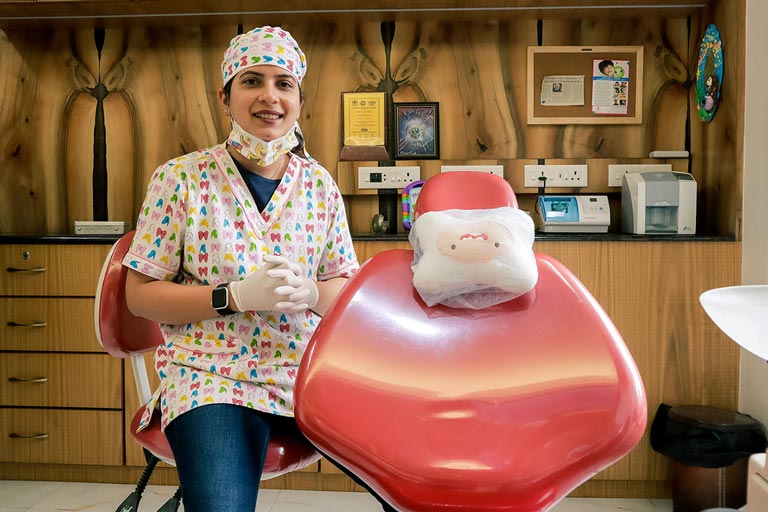
Virtual Video Consultation Fees Rs. 500
The Consultation Fees Must Be Paid Online by GOOGLE PAY BEFORE YOUR APPOINTMENT. See The Instructions On Appointment Confirmations
Your virtual video consultation includes:
- Discussion of problems that your child is facing like tooth pain, swelling or any other emergencies
- Dr. Pratibha will recommend a course of treatment or medications for your child.

Meet the Doctor
Pediatric and Preventive Dentistry Specialist
Dr. Pratibha is the Chief Dentist at Pandit Clinic. She is also a Consultant Pediatric Dentist at Kotbagi Hospital and KEM Hospital, Pune.
Dr. Pratibha has trained at the prestigious Chang Gung Memorial Hospital, Taiwan, in advanced areas including Pediatric dental treatment under General Anesthesia and Intravenous sedation, Dental Rehabilitation of children with special health care needs, and Nasoalveolar molding and dental rehabilitation of cleft lip and cleft palate.
She’s the lifetime member of Student Clinician Association, American Dental Association (SCADA), USA.
Professional Affiliations and Skills
- Trained in Pediatric dental treatment under General Anesthesia and Intravenous sedation at Chang Gung Memorial Hospital, Taiwan
- Trained in Dental Rehabilitation of children with special health care needs at CGMH, Taiwan
- Trained in Nasoalveolar molding and dental rehabilitation of Cleft lip and Cleft Palate at craniofacial centre, CGMH, Taiwan
- Awarded Lifetime membership, SCADA (Student Clinician Association, American Dental Association), USA.
You Might Be Interested In

Baby Teething: Signs Of Teething And How To Care For Baby Teeth
Teething can be a challenging time for both babies and parents, but with patience and understanding it can be manageable. In this blog, we’ll discuss

Autism & Dentistry: A Positive Experience in Pune
April is celebrated as Autism Awareness Month, a time to acknowledge the incredible diversity of the autism community. At Pandit Clinic, Dentistry for Children, Teens and Special